|
-
23rd November 18, 02:42 PM
#1
Here are a couple hints which can make purlling a fringe just a bit easier.
I pull fringe using a wire bristle dog brush. I pull between 4 and 6 inches.
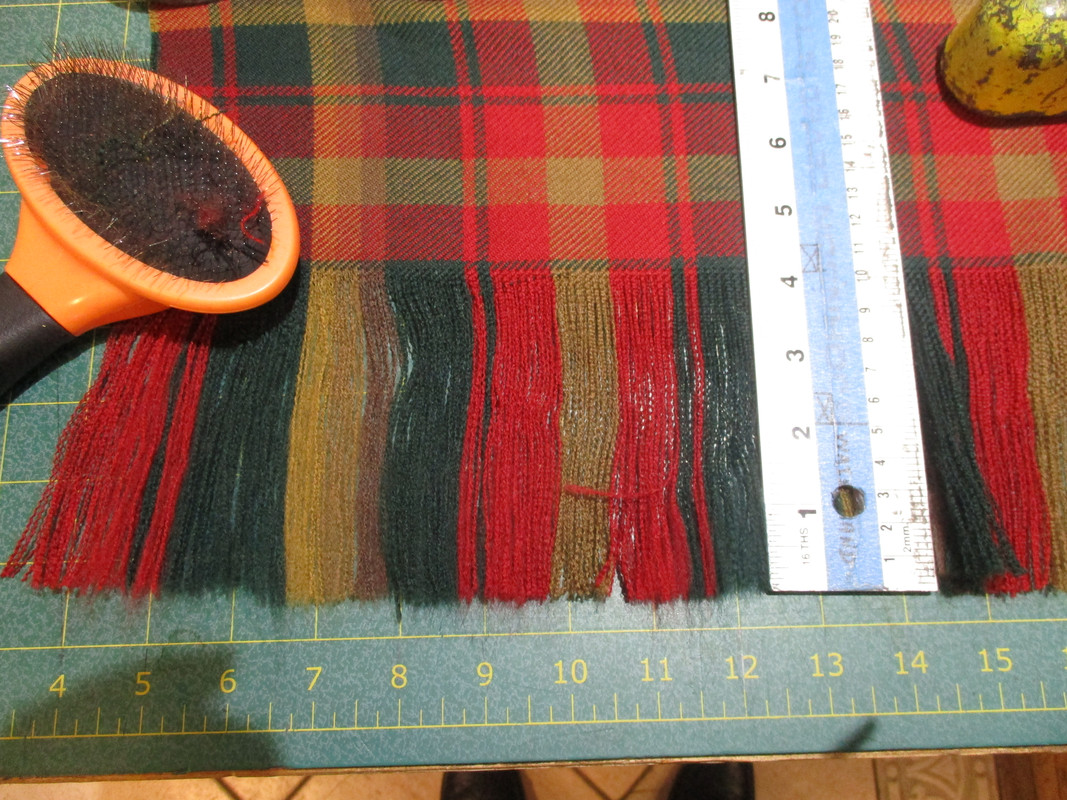
Then with two forceps I put the number of yarns for each half of the twist in the jaws and with your fingertips twist each 12-15 turns in the same direction.
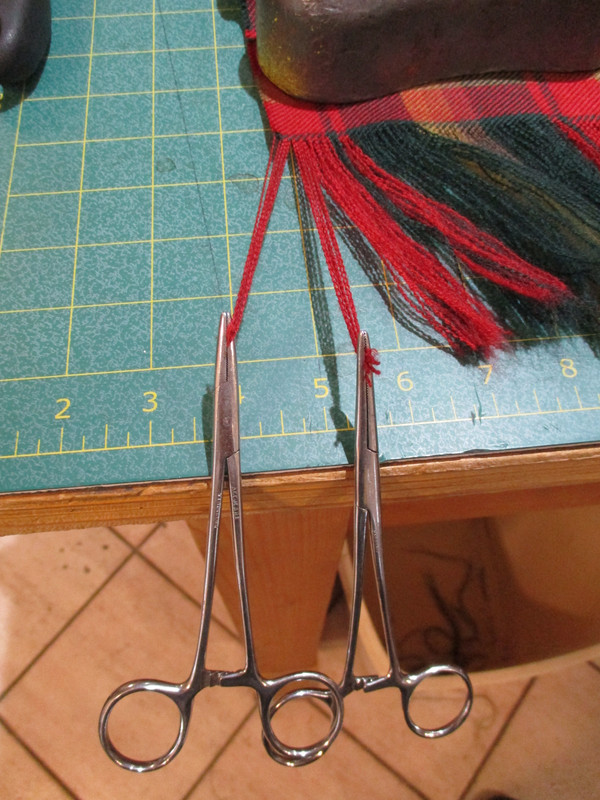
Then just drop both forceps together over the edge of your table and they will spin together putting the twist into the fringe.

A simple overhand knot finishes off the purl.

If you don't have a source for forceps you could also find one of these fringe twisters which work the same way.

Last edited by Steve Ashton; 23rd November 18 at 02:47 PM.
-
The Following 7 Users say 'Aye' to Steve Ashton For This Useful Post:
-
30th November 18, 12:12 PM
#2
 Originally Posted by Steve Ashton

Here are a couple hints which can make purlling a fringe just a bit easier.
I pull fringe using a wire bristle dog brush. I pull between 4 and 6 inches.
Then with two forceps I put the number of yarns for each half of the twist in the jaws and with your fingertips twist each 12-15 turns in the same direction.
Then just drop both forceps together over the edge of your table and they will spin together putting the twist into the fringe.
A simple overhand knot finishes off the purl.
If you don't have a source for forceps you could also find one of these fringe twisters which work the same way.
Ahhhh, the voice of experience! Some handy tips, for sure.
Tobus, nice job and am glad you posted this. It is a learning experience for all.
As an aside, don't feel too bad about a six year wait. I bought the same tartan around the same time (June 2012) while it was still a stock item at Dalgliesh and am yet to have the kilt made.
-
The Following User Says 'Aye' to bodhran4me For This Useful Post:
-
30th November 18, 12:47 PM
#3
You might not be able to tell in my photos due to the size, but I was actually wearing my plaid upside-down from the way it is recommended in the thread I linked to. When folded and worn over the shoulder, the two selvedge edges should be the bottom layers, with the selvedges sitting next to the neck. That way, you can grab the selvedges and shake down the top fold to let it drape at half-width. Or just grab the bottom selvedge layer and shake out the plaid to full-width, all without ever taking it off your shoulder. But I was wearing it with the selvedges at the top layer, incorrectly.
I'd like to explore other variations of how to unwrap and wear it, but I will need a big pin or brooch for that. In the meantime, I'm interested in how plaids were worn historically, just out of a sense of visual interest. Take, for instance, the MacLeay portrait below. Most of the plaids in his portraits are worn similarly when wrapped around the chest. The wearer doesn't keep the front hanging down straight, with all the fringe at the bottom. He keeps one corner high at the shoulder and drapes the rest of that end of the plaid diagonally over his arm (not under it), so that the fringe makes for a decorative edge display.
I'm not that knowledgeable about wearing plaids or even the different types of plaids. The plaids in MacLeay portraits all seem to be fairly short compared to mine. Meaning, when wrapped around the chest they don't drape as far down in the back below the bottom of the kilt like mine. Is this a different style or type of plaid than the day plaid? I mean, all plaids are pretty much the same (except for pipers' plaids, apparently), but do the shorter ones go by a different name? Or is it that his is actually longer and he has it wrapped twice around his chest instead of letting the extra length hang in the back?

-
 Posting Permissions
- You may not post new threads
- You may not post replies
- You may not post attachments
- You may not edit your posts
-
Forum Rules
|
|











Bookmarks