






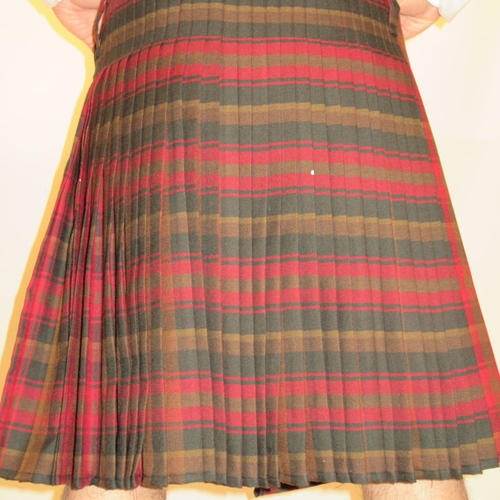
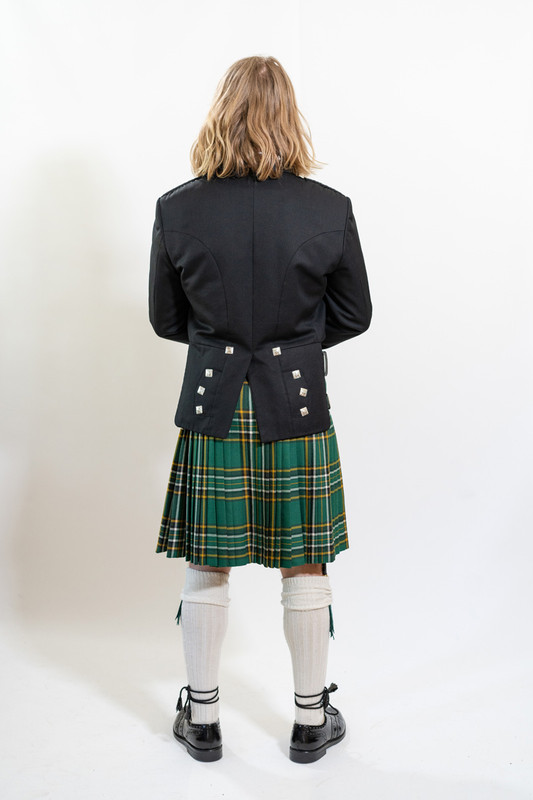
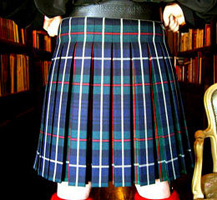
A kilt that is fitted, made, and worn well, should have the pleats in the back that hang completely straight, parallel and from a few feet away you should almost not be able to see individual pleats.
There are a couple of things that go into making a well fitted kilt.
The first is the hip circumference. A kilt that is too small in the hips will have the aprons gaping open.
But a kilt that is too large in the hips will look like this.
This is one example of the shower curtain folds.
Another example of something that will cause the shower curtain folds is wearing the kilt lower than where it was designed to be worn.
All of the kilts made in the iconic style (What some call traditional) will be designed so that the top strap cinches into the anatomical waist.
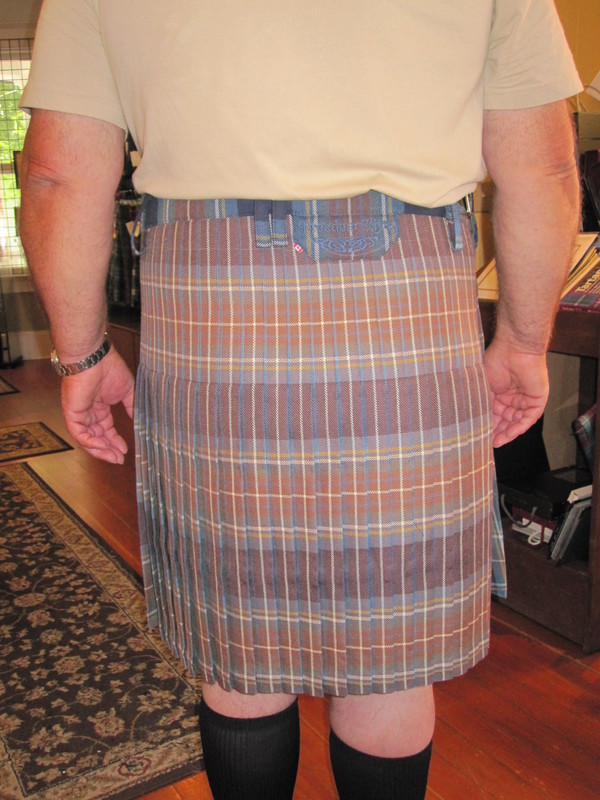
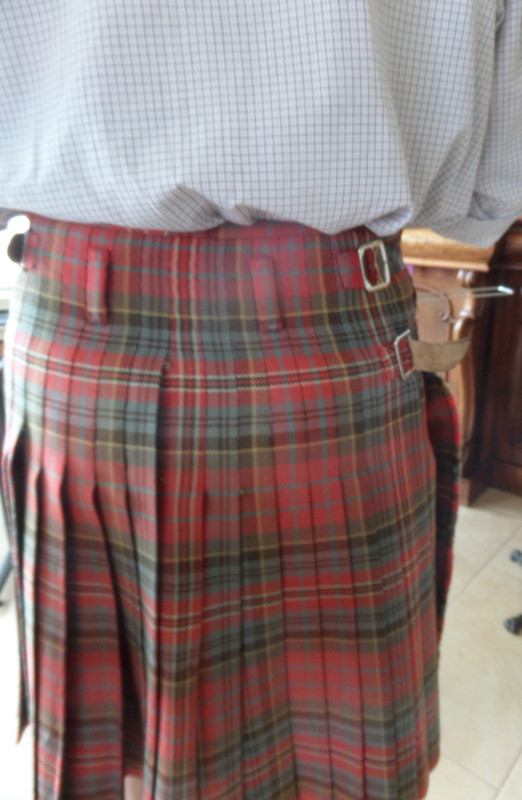
In the back, the part of the kilt that is tapered and sewn down is called "The Fell". The bottom of the Fell should hit right at the crest of the hips or buttocks.
If you lower the waist of the kilt and wear it like pants, the bottom of the Fell drops below the hips and you get the shower curtain folds in the back.
Now, there are other problems with this kilt and they are all due to it being worn other than how it was designed to be worn. The bottom of the Fell being worn low caused the pleat stitching to fail along with the hip strap being fastened too tight. Every time the guy would sit down too much stress was placed on the stitching.
If the Fell is too short you will see the pleats pulled and gaping open.
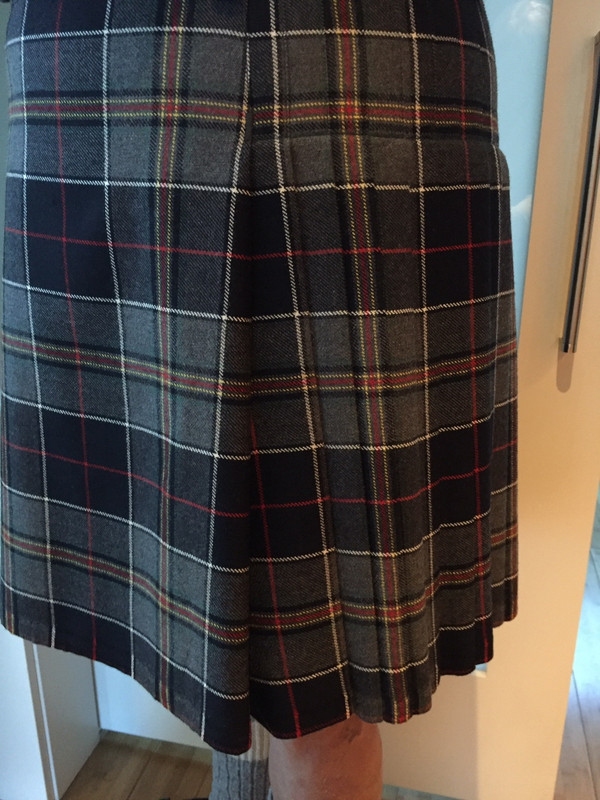
The shower curtain folds can also be seen in a kilt that was pressed incorrectly.
The creases of the pleats should follow the Tartan pattern all the way from the bottom of the Fell to the Selvedge. The Tartan pattern should be the same distance from the crease edge all the way down.
This is quite common when a dry cleaner who is not familiar with kilts tries to press pleats.






Bookmarks