X Marks the Scot - An on-line community of kilt wearers.
|
-
24th October 23, 12:57 PM
#1
I use the same 100% Polyester Gutterman brand thread that Barb uses. It is thin so hides well is very strong and is available in a huge range of colors.
I have seen kilts sewn with a thicker thread. I have seen kilts sewn with Cotton thread. I have seen kilts sewn with Silimide thread. I have tried Silimide thread and it works very well but is not available in a wide enough color range for many Tartans and is much more expensive.
For my internal pad stitching I use Coats and Clark brand extra strong upholstery thread.
I do not use thick thread for pleat stitching and never use cotton thread for kilts.
-
-
24th October 23, 01:04 PM
#2
When stitching pleats - due to the way I support the weight of the kilt on a table in front of me because I stitch left-handed - I always stitch in the direction from the hips to the waist. This allows me to control the tension on the fabric with my right hand and the needle in my left.
I also press my pleats before sewing and use pins as I work.
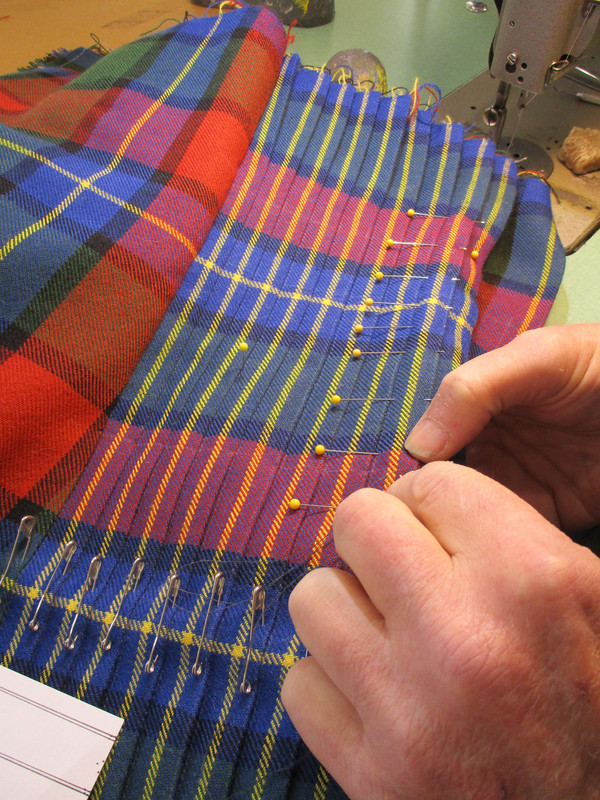
Barb likes a leather thimble. I prefer a British style ring thimble and learned to hold my needle like a British Tailor.
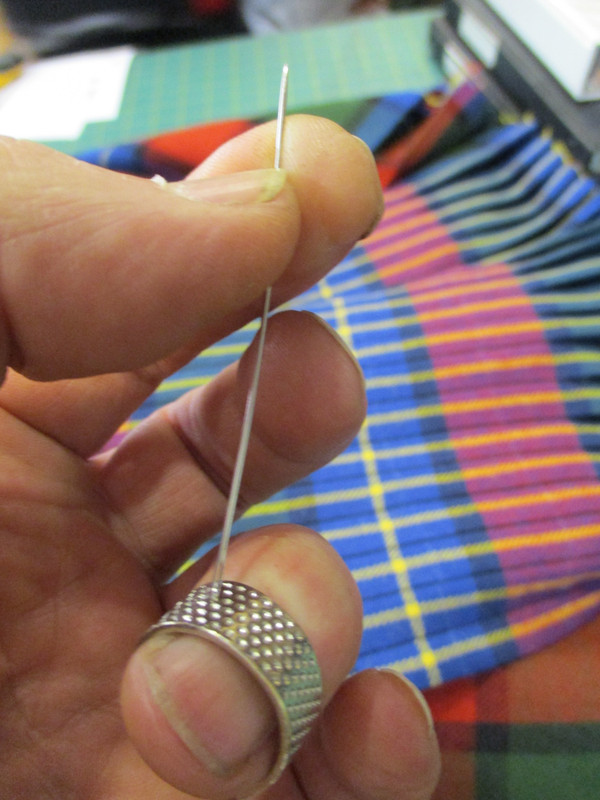
Last edited by Steve Ashton; 24th October 23 at 01:05 PM.
-
The Following User Says 'Aye' to Steve Ashton For This Useful Post:
-
24th October 23, 01:09 PM
#3
I've never been able to work with a thimble, but may have to give the ring thimble a try. Never seen one before! I have a huge callous on the side of my middle finger that acts as my thimble, lol.
-
-
24th October 23, 01:11 PM
#4
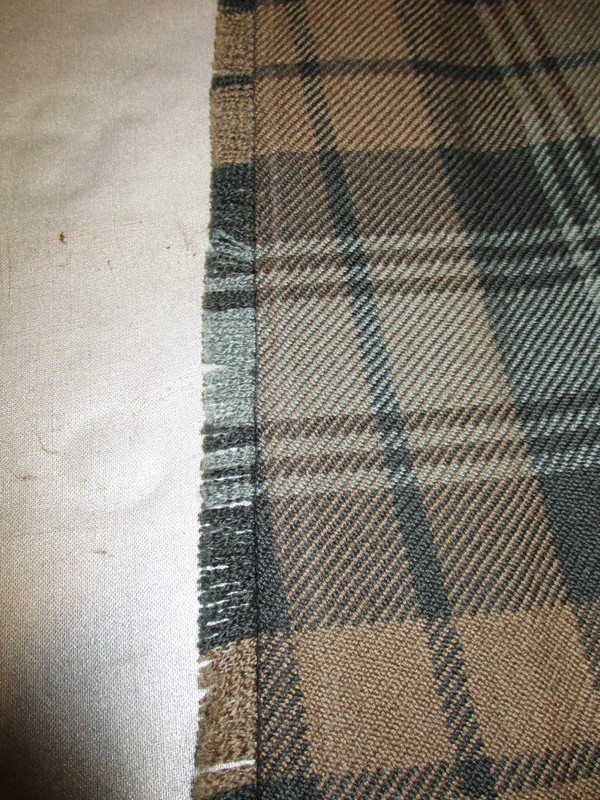
I use a total of only four stitches to make a kilt.
The Fell Stitch as described earlier.
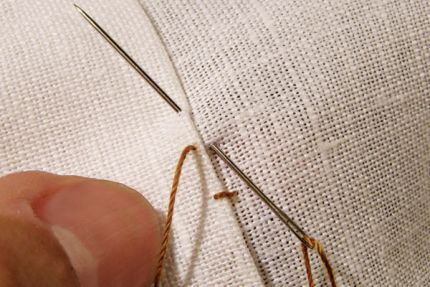
The Pad Stitch also described earlier.
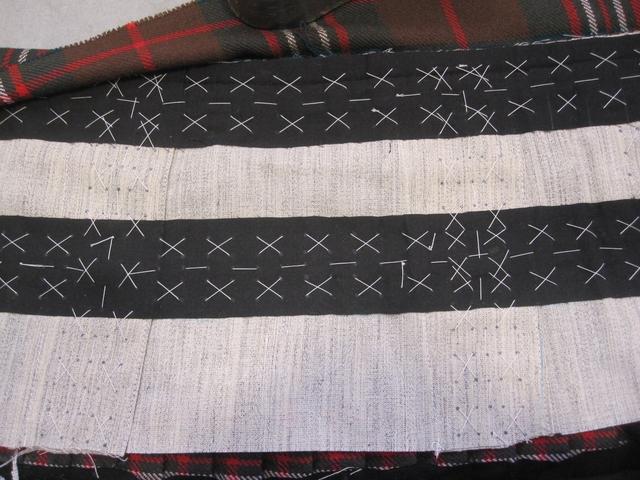
The Catch Stitch to sew up the small corners of the aprons at the selvedge, the inside of the apron facings etc.
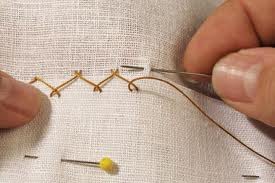
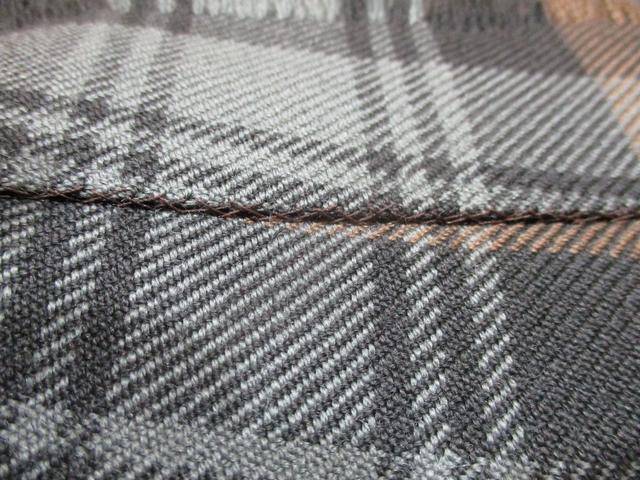
The Pick Stitch for apron facings, liner and anywhere else I don't want stitches to show on the outside of the kilt.
Last edited by Steve Ashton; 24th October 23 at 01:25 PM.
-
-
24th October 23, 01:47 PM
#5
When hand-stitching a kilt I am not inventing anything new. I use the same techniques, methods and materials as a Saville Row Tailor. Just not as skillfully.
There are very few places where kiltmaking and making a man's tailored suit vary. In a kilt there is a line of stitches to support the weight of the pleats where they are cut away and would sag by gravity if not supported.
When making a kilt there is no paper pattern or cut out pieces that are seamed together. In fact, right up to the point where the inside of the pleats are cut-away to prevent bulk in the back of the Fell, the entire kilt can be un-stitched and will be a long, single length of fabric again.
Things like interfacing which give stability, body, and prevent drooping are the same. Only when stitching the straps and buckles do I stitch all the way through the outer Tartan fabric and interfacing to anchor the straps and buckles to the stabilizer with strong upolstery thread.
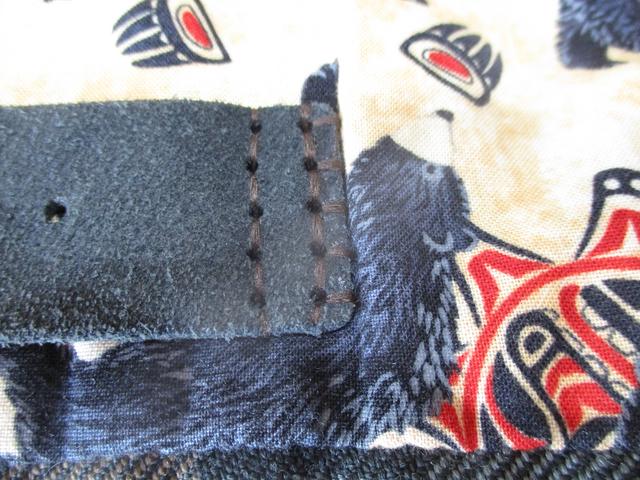
The liner on the inside of the kilt is only there to hide the internal strengthening elements. It is usually made from a cotton boadcloth and can be replaced if needed without needing to disassemble the kilt. the liner should be fully sewn on all the edges. There should be nothing to catch or snag inside the kilt.
In fact, one of the dead give-aways that a kilt is not made to be of heritage quality is when you can lift the liner, find any interfacing sewn to just the liner, an and the pleat cut-aways allowed to fray.

-
-
24th October 23, 01:55 PM
#6
Now here's a whole goldmine of informations!
Thank You very much Steve! This is really worth learning from...
-
 Posting Permissions
- You may not post new threads
- You may not post replies
- You may not post attachments
- You may not edit your posts
-
Forum Rules
|
|











Bookmarks