|
-
13th March 26, 03:52 PM
#11
The bottom line with the number of yards in a kilt is that the two overlapping front aprons remain the same regardless, and as the yards go up the additional yards are all in back, so that the kilt gets more and more back-heavy. The cutting out of the pleats helps offset this to some degree.
There's a modern notion that "proper" kilts must have 8 yards.
For years I've been collecting vintage Highland Dress catalogues from Scottish kilt shops and they tell a different tale: throughout the 1920s up into the 1970s identical-quality gents' kilts are offered in 6, 7, and 8 yards. This of course is prior to the concept of "casual" kilts.
And in the early 19th century it was less than that, for example the 93rd Foot in 1801
Officers: 5 yards
Grenadiers: 3.75 yards
all others: 3.5 yards
From 1850 the yardage gradually increased to 6 yards, and reaching 7 yards by 1894.
So a 5 yard kilt, far from being skimpy, in 1801 was a luxurious Officers' kilt.
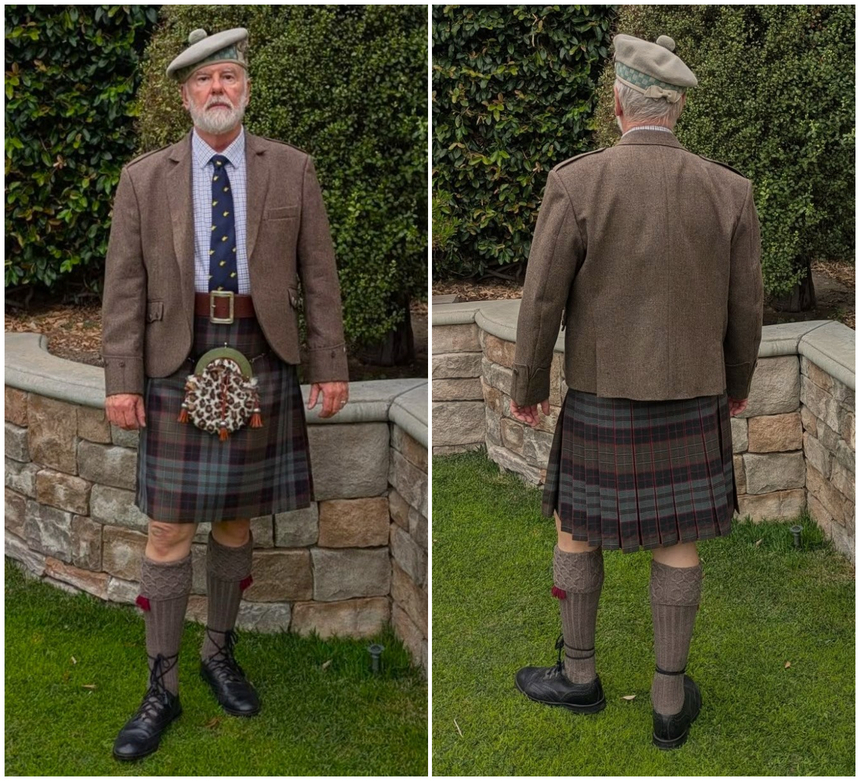
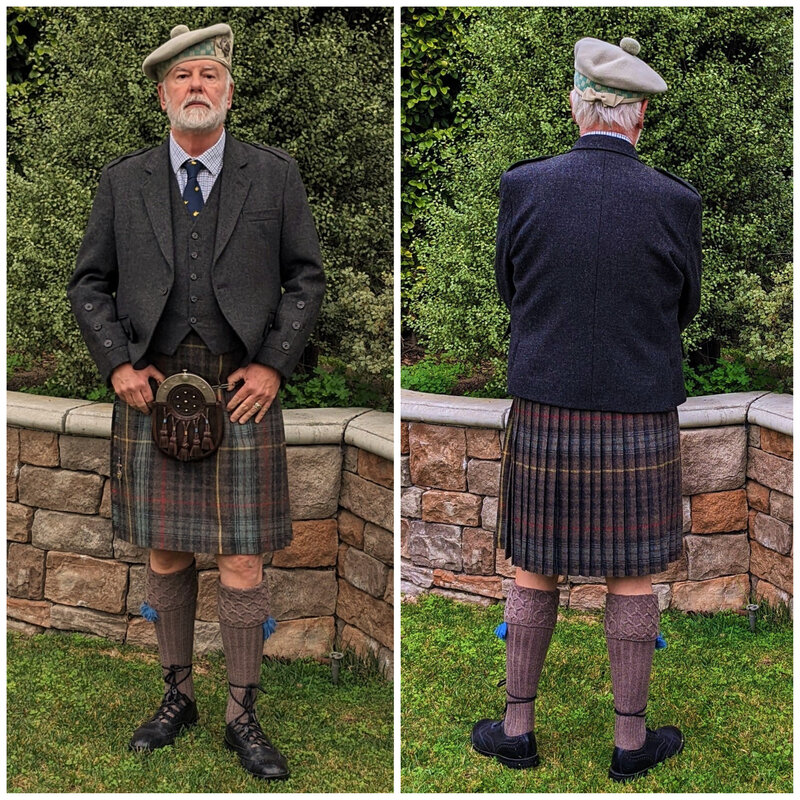
For me the ideal kilt is around 6 yards. There's plenty of pleats to swing and the kilt isn't too heavy in back.
My 6-yard 10 ounce boxpleated kilt
My 6-hard knifepleated kilt
Last edited by OC Richard; 13th March 26 at 03:56 PM.
Proud Mountaineer from the Highlands of West Virginia; son of the Revolution and Civil War; first Europeans on the Guyandotte
-
The Following 3 Users say 'Aye' to OC Richard For This Useful Post:
-
15th March 26, 09:03 AM
#12
 Originally Posted by RockyR

I will slightly disagree with Ian's take (he's my store manager and was one of our kiltmakers before that). I HAVE made a 5 yard kilt for myself with the pleats scalloped out and horsehair canvas put in along with the lining. It was a little (very little) lighter than our normal 5 yarder and was NOT flimsy at all due to the horsehair I used. As a kiltmaker, I just wanted to see what it felt like to wear it, which is why I did it as an experiment (this was back in like 2010 or so).
Is that kilt lighter? Slightly. Was the extra time worth the weight savings? Not really, IMHO. Is it "cooler" since there's a bit less cloth in the small of the back? Again... Slightly.
That said, a 5 yard kilt (or a 4 yard "Casual" kilt like some Scottish kiltmakers produce) does not need the cloth to be scalloped out. 8 Yard kilts need the pleats to be scalloped out for weight reduction and for heat. Think of it this way (broad numbers quoted here):
An 8 yard kilt has 1 yard (roughly) of cloth in the front apron, 1 yard in the under apron and 6 yards stacked up in the pleats.
A 5 Yard kilt has 1 yard (roughly) of cloth in the front apron, 1 yard in the under apron and only 3 yards in the pleats.
The extra 3 yards in the pleats of an 8 yard kilt, all stacked up, make it much warmer, which means it has to be scalloped out. The lesser quantity of 3 yards (roughly) of pleats in a 5 yarder means that it's not nearly as necessary from a warmth or weight perspective. Some people would still prefer the upper portion of a 5 yard wool kilt to have the cloth scalloped out, but that extra time in labor would cost extra money. I have found that most people aren't able to feel the weight savings or heat difference of a 5 yard kilt with scalloped pleats vs. one without.
My $.02. :-)
have you ever done a video discussing the differences?
-
The Following User Says 'Aye' to geomick For This Useful Post:
-
17th March 26, 04:34 AM
#13
Originally Posted by RockyR
I HAVE made a 5 yard kilt for myself with the pleats scalloped out and horsehair canvas put in along with the lining. It was a little (very little) lighter than our normal 5 yarder and was NOT flimsy at all due to the horsehair I used. As a kiltmaker, I just wanted to see what it felt like to wear it, which is why I did it as an experiment.
Is that kilt lighter? Slightly. Was the extra time worth the weight savings? Not really, IMHO. Is it "cooler" since there's a bit less cloth in the small of the back? Again...Slightly.
I did a version of that experiment.
What I found was that due to using heavy thick cloth, 16 ounce Tweed, and also to adding a 6th yard, the kilt with traditional cut-out pleats was significantly lighter and less bulky.
As the cloth gets thinner and lighter the extra bulk and weight in the fell obviously diminishes. I assume that with lightweight cloth the difference is slight.
Interestingly, though my kilt with the cut-out pleats had 7 yards, and the one that retained all the fabric in the fell had 6 yards, the 7-yard kilt was lighter and conformed to "the small of my back" better.
The caveat was, as I mentioned in my video, that since 1975 I've only worn traditionally made kilts (indeed no other sort existed for my first 20 years of kilt-wearing) so putting on a kilt with the extra cloth in the fell was a novel experience. I would think that new kilt-wearers who started out with casual kilts would take that feel for granted.
Last edited by OC Richard; 17th March 26 at 04:37 AM.
Proud Mountaineer from the Highlands of West Virginia; son of the Revolution and Civil War; first Europeans on the Guyandotte
-
-
17th March 26, 04:37 AM
#14
Originally Posted by geomick
have you ever done a video discussing the differences?
I did. (I receive no money from Youtube.) https://www.youtube.com/watch?v=px5D9CFCi7Q
Proud Mountaineer from the Highlands of West Virginia; son of the Revolution and Civil War; first Europeans on the Guyandotte
-
 Posting Permissions
- You may not post new threads
- You may not post replies
- You may not post attachments
- You may not edit your posts
-
Forum Rules
|
|







 Reply With Quote





Bookmarks