|
-
20th April 10, 11:15 PM
#1
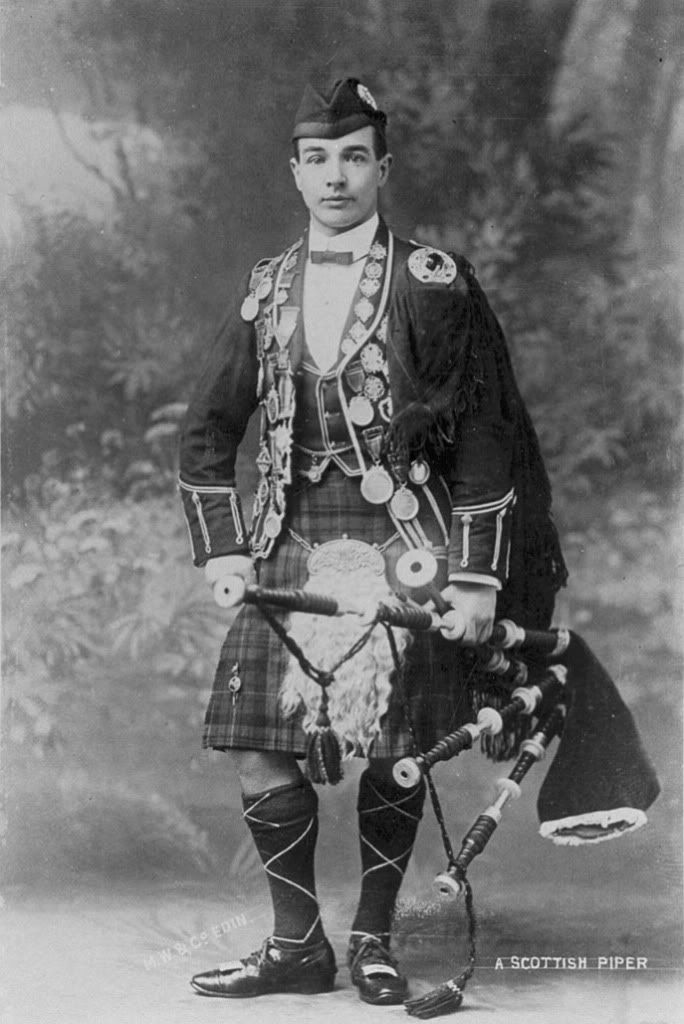
James Center (1875-1919)
James Alexander Center was born into an Edinburgh pipemaking family on April 14, 1875. His father John, born in Aberdeenshire in 1831, was a well known Edinburgh photographer and pipemaker by 1869. John and his wife Jane (his first cousin) would have nine children.
James was originally taught by his father, then became a pupil of John MacDougall Gillies and a top competing piper and Highland dancer. He won the Gold Medal and the Clasp at Inverness on the same day in 1904, one of only a handful of pipers to achieve that distinction. He won the Gold Medal at Oban in 1906 and the Strathspey and Reel and March there in 1903 and 1906 respectively.
He followed his father into the pipemaking business, and the family emigrated to Australia in 1907, when Jimmy was 28. At the time, many regarded him as the best piper in Scotland.
His father John died in 1913.
James Center competed regularly in Australia, dominating the prize lists wherever he went, not only in the piping, but also in the Highland dancing. Prize money was good in Australia, and on a good day he could pocket £60, a huge sum at the time.
He was a dapper, well-dressed man, and today, his name is perhaps best remembered not only for the family’s superbly crafted pipes, but for the great Willie Ross jig, “Center’s Bonnet.”
James Center died in Melbourne in 1919, the most prominent piper known to have died of the Spanish flu epidemic that killed 20,000,000 people worldwide.
http://www.pipetunes.ca/composers.as...composerID=134
[SIZE="2"][FONT="Georgia"][COLOR="DarkGreen"][B][I]T. E. ("TERRY") HOLMES[/I][/B][/COLOR][/FONT][/SIZE]
[SIZE="1"][FONT="Georgia"][COLOR="DarkGreen"][B][I]proud descendant of the McReynolds/MacRanalds of Ulster & Keppoch, Somerled & Robert the Bruce.[/SIZE]
[SIZE="1"]"Ah, here comes the Bold Highlander. No @rse in his breeks but too proud to tug his forelock..." Rob Roy (1995)[/I][/B][/COLOR][/FONT][/SIZE]
-
-
20th April 10, 11:24 PM
#2
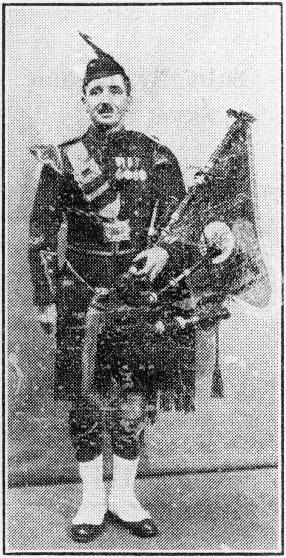
William Fergusson (1885-1949)
William Fergusson was born in Arbroath in 1885 and died in Glasgow in 1949. Composer of such march standards as “The Australian Ladies,” “The Atholl and Breadalbane Gathering,” and “Kintara to El Arish,” as well as the strathspey “Dornie Ferry,” he learned piping in the 102nd Boys Brigade under ‘P/M Hutchins,’ and was then taught by 7th Battalion H.L.I. Pipe Major Farquhar MacRae, a pupil of Sandy Cameron. He would succeed MacRae as pipe major in 1914, though before this he was divisional pipe major of the 52nd Lowland Division. Most of his great tunes were written during the war years....
(read more here)
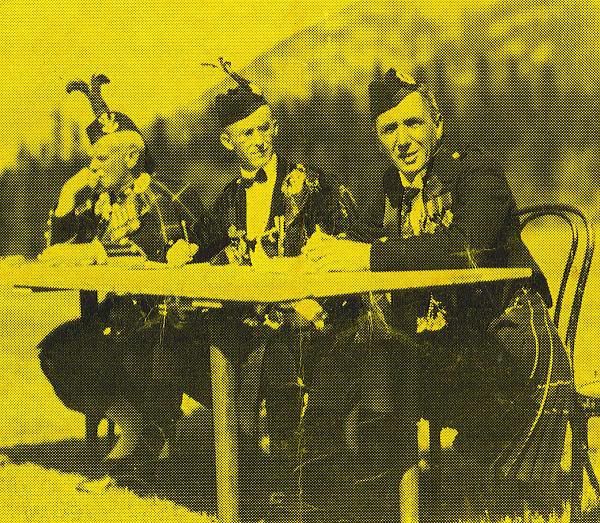
William Fergusson (right) judges in Banff, Alberta, in 1931 with John Gillies of Vancouver (left) and Murdo MacLeod of Toronto.
[SIZE="2"][FONT="Georgia"][COLOR="DarkGreen"][B][I]T. E. ("TERRY") HOLMES[/I][/B][/COLOR][/FONT][/SIZE]
[SIZE="1"][FONT="Georgia"][COLOR="DarkGreen"][B][I]proud descendant of the McReynolds/MacRanalds of Ulster & Keppoch, Somerled & Robert the Bruce.[/SIZE]
[SIZE="1"]"Ah, here comes the Bold Highlander. No @rse in his breeks but too proud to tug his forelock..." Rob Roy (1995)[/I][/B][/COLOR][/FONT][/SIZE]
-
-
20th April 10, 11:29 PM
#3
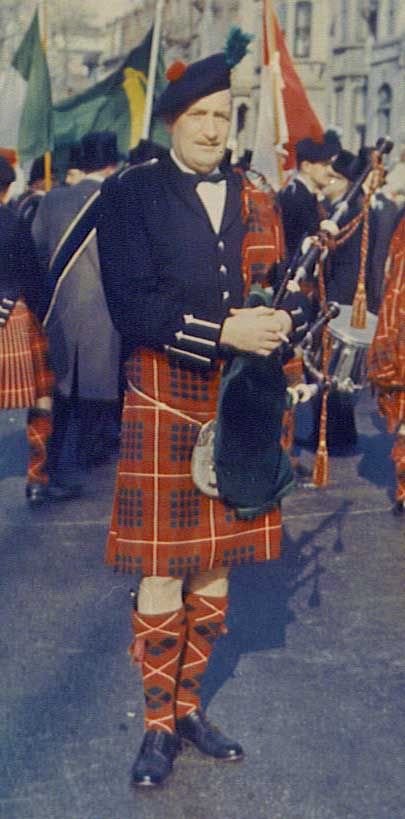
George Grant (1920-1965)
Born in Dumfries, Scotland, on March 21, 1920, Pipe Major George Darroch Grant was raised with an uncle in the Highlands, and started pipes with his grandfather. He joined the Scots Guards when he was 17 and served during the war in the North African campaign and elsewhere.
He took the Pipe Major’s course from Willie Ross at the Castle, and served as Pipe Major of the Second Battalion of the Scots Guards for five months, from November, 1945 until March, 1946. Thereafter he spent seven years in the Edinburgh Police before emigrating to Montreal, where he joined the R.C.A.F. security police. He also became a member of the Rockcliffe R.C.A.F. Pipe Band, where he played with the likes of John T. MacKenzie and drummer Jim Blackley.
During his later years George Grant became extremely active in the Montreal piping scene. He was charming and well liked, and a huge supporter of all things Celtic. He organized dances, concerts, recitals and piping classes as well as serving as Pipe Major of the City of Montreal Pipe Band. As a composer, he excelled at writing jigs, and his “Wee Marie” and “Marjorie Lowe” are two of the finest in the idiom.
He was a prize-winning professional competitor in Ontario and Quebec, and his name graced all the major trophies at Maxville until they were destroyed in a fire.
On September 4, 1965, he had just finished playing in the professional events at the games in Schenectady, NY and was preparing to set up the City of Montreal band for the afternoon’s competition when he was stricken with a heart attack and collapsed. Though well enough to express his regrets at not being able to play a lament for his recently deceased friend George Duncan, he later fell into a coma and passed away two weeks later. He was 45.
His funeral service took place on October 9 in the R.C.A.F. Chapel in St. Hubert, and he was buried in Mount Royal Cemetery.
George Grant, in the kilt of the City of Montreal Pipe Band, in 1964.
http://www.pipetunes.ca/composers.as...&composerID=53
[SIZE="2"][FONT="Georgia"][COLOR="DarkGreen"][B][I]T. E. ("TERRY") HOLMES[/I][/B][/COLOR][/FONT][/SIZE]
[SIZE="1"][FONT="Georgia"][COLOR="DarkGreen"][B][I]proud descendant of the McReynolds/MacRanalds of Ulster & Keppoch, Somerled & Robert the Bruce.[/SIZE]
[SIZE="1"]"Ah, here comes the Bold Highlander. No @rse in his breeks but too proud to tug his forelock..." Rob Roy (1995)[/I][/B][/COLOR][/FONT][/SIZE]
-
-
20th April 10, 11:35 PM
#4
William Lawrie (1881-1916)
The death of Willie Lawrie at age 35 in 1916 remains to this day one of piping’s greatest premature losses.
A native of Ballachulish, Argyll, he was first taught by his father, but later by John MacColl, with whom he remained friends throughout his brief life. In 1910 he became only the second piper ever to win the Gold Medals at both Oban and Inverness in the same year, and he added Clasp to his Inverness Gold Medal the following year. He won the marches and the strathspeys and reels at Inverness on the same day.
But his prime legacy is as a composer. His output was small – around 20 tunes – but powerful. His distinctive gift for melody and structure gave us some of the best tunes in the art form: the marches John MacDonald of Glencoe, The Pap of Glencoe, The Braes of Brecklet and Mrs. H. L. MacDonald of Dunach, the strathspey Inveraray Castle, the 4/4 march The 8th Argylls and the 9/8 retreat march The Battle of the Somme, to name a few. These tunes are stunning achievements for a man who, it could be argued, was still short of his prime.
In 1914 he succeeded George Ross as Pipe Major of the 8th Argyllshire Battalion of the Argyll and Sutherland Highlanders – the 8th Argylls – and accompanied them to France in 1915. But in 1916 he became ill while in the trenches, was invalided home, and died in a military hospital on November 28.
While the common spelling of his name is “Lawrie,” older sources go with “Laurie,” as evidenced by the obituary reprinted below from The Oban Times, December 16, 1916. The piece suitably captures the spirit of one of the most talented pipers and composers of his day....
(read more here)
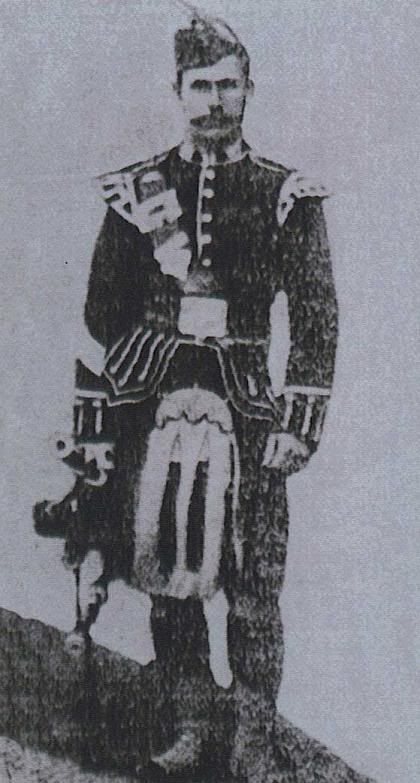
Willie Lawrie in an undated photo
[SIZE="2"][FONT="Georgia"][COLOR="DarkGreen"][B][I]T. E. ("TERRY") HOLMES[/I][/B][/COLOR][/FONT][/SIZE]
[SIZE="1"][FONT="Georgia"][COLOR="DarkGreen"][B][I]proud descendant of the McReynolds/MacRanalds of Ulster & Keppoch, Somerled & Robert the Bruce.[/SIZE]
[SIZE="1"]"Ah, here comes the Bold Highlander. No @rse in his breeks but too proud to tug his forelock..." Rob Roy (1995)[/I][/B][/COLOR][/FONT][/SIZE]
-
-
20th April 10, 11:41 PM
#5
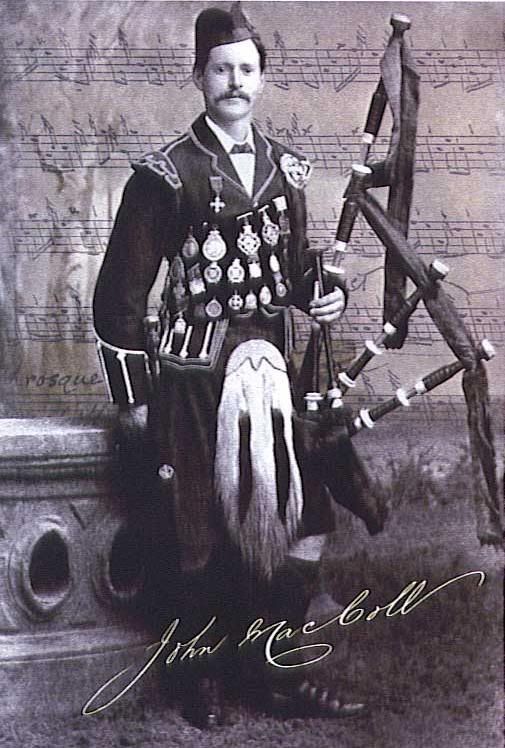
John MacColl (1860-1943)
Seven of the greatest competition 2/4 marches –Mrs, John MacColl, Jeannie Carruthers, The Argyllshire Gathering, Arthur Bignold of Lochrosque, The Clan MacColl, Dugald MacColl’s Farewell to France and John MacFadyen of Melfort – all came from the fertile composing mind of John MacColl, one of the greatest figures from what is often regarded as piping’s ‘Golden Age.’
His greatness stems from more than just his compositions. The 4th son of Dugald MacColl, a tailor and an excellent piper from Kentallen, he distinguished himself from his piping brothers by a desire not just to do well, but to be the best. He would excel not just at composing, but as a piper, a fiddler, a Highland dancer and an athlete.
Instruction came initially from his father, and then from the famous pipe music editor and player Donald MacPhee (1841-1880) and finally from Pipe-Major Ronald MacKenzie of the Black Watch (1842-1916), who won the Prize Pipe at Inverness in 1873, the Gold Medal there in 1875 and died in 1911. His initial forays into competitive piping starting when he was 17 in 1877 were not particularly successful. He was competing against piping immortals like Robert Meldrum and John MacDougall Gillies and success was not immediate. But in 1880 he became piper to MacDonald of Dunach and was able to devote his life to piping. He won the Gold Medal at Oban the next year, the Prize Pipe at Inverness in 1883, the Former Winners’ Gold Medal at Inverness in 1884, the Clasp at Inverness in 1900 and first prize at the Paris Exhibition in 1902.
A professional piper, he competed everywhere, but not just in the piping. His son John once wrote of his father:
“He did tell me of finishing a dance, throwing off his kilt (having running shorts underneath) competing in the hundred yards race and then putting his kilt and things on ready for the next dance. This, of course, was just as a professional to augment his prize money for the day. Naturally his major earnings came from playing the pipes, dancing and teaching.”
Unlike today, the games circuit was lucrative for one so versatile, and the ability to earn £40 in an afternoon in the late 1800s afforded him the leisure to pursue yachting, golf, shinty, fiddling, Gaelic singing and composing.
He served as pipe-major of the 3rd Battalion of the Black Watch and after that with the Scottish Horse. He trained pipers and taught piobaireachd for the Piobaireachd Society.
Around the turn of the century he, Willie Lawrie and G. S. McLennan revolutionized the composition of light music, and in particular took the competition march form to a level that has not been equalled.
His piobaireachd playing received mixed reactions. He won the major prizes, but never dominated the piobaireachd lists as he could in the light music, where he was considered the best march player of the time. Some thought his piobaireachd playing lacked the expressive feeling of his light music, but John MacDonald of Inverness called one of his performances of “I Got a Kiss of the King’s Hand” at Birnam Games “one of the most harmonious performances I have ever listened to.” He composed three piobaireachd, two of which (Lament for Donald MacPhee and N.M. MacDonald’s Lament) won composing contests, and the third of which has been lost.
In 1908 he gave up the games circuit and joined the Glasgow firm of R. G. Lawrie as the manager of their new bagpipe making branch. John MacDougall Gillies was similarly in charge of Henderson’s shop, and as a result, some of the greatest sets of pipes ever made came from these two firms during this time. MacColl retired from Lawrie’s in 1936. During those first few decades of the 1900s, he and MacDougall Gillies – who died in 1925 – helped build the Glasgow piping community into a centre of piping excellence that has continued to this day.
John MacColl died on June 8, 1943. John MacDonald of the Glasgow Police played Lament for the Children at his funeral.
http://www.pipetunes.ca/composers.as...&composerID=19
[SIZE="2"][FONT="Georgia"][COLOR="DarkGreen"][B][I]T. E. ("TERRY") HOLMES[/I][/B][/COLOR][/FONT][/SIZE]
[SIZE="1"][FONT="Georgia"][COLOR="DarkGreen"][B][I]proud descendant of the McReynolds/MacRanalds of Ulster & Keppoch, Somerled & Robert the Bruce.[/SIZE]
[SIZE="1"]"Ah, here comes the Bold Highlander. No @rse in his breeks but too proud to tug his forelock..." Rob Roy (1995)[/I][/B][/COLOR][/FONT][/SIZE]
-
-
20th April 10, 11:57 PM
#6
William MacDonald (1843 - ?)
Known as the composer of "Leaving Glenurquhart" (originally known as "Tulloch MacCarrick"), William MacDonald was the brother of Alexander MacDonald, who was the father of John MacDonald of Inverness, and Duncan MacDonald.
He was born in Easgart, in Glenurquhart and taught by Donald Cameron and Duncan MacKay. He was described as a foremost piper of his day and won the Gold Medal at Inverness in 1869. He was piper to MacPherson of Glentruim for two year, and in 1965 was appointed piper to the Prince of Wales at Abergeldie. "Tulloch MacCarrick" was a farm near Balmoral, whose tenant was a lover of pipe music and who frequently hosted notable pipers visiting Balmoral Castle.
Like many of his day, MacDonald played on the right shoulder.
Though he was said to be a quiet, unassuming man, he was seized with religious zeal later in life and reportedly destroyed his pipes and swore off all music.
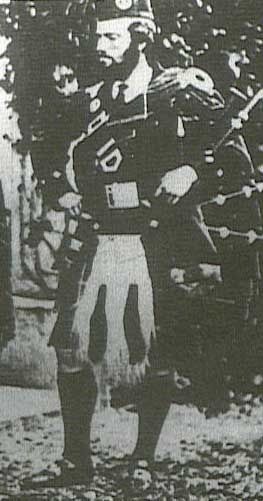
William MacDonald as the piper to the Prince of Wales in 1867.
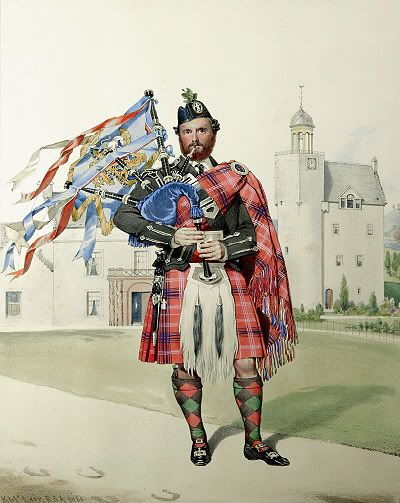
William MacDonald as painted by Kenneth MacLeay
http://www.pipetunes.ca/composers.as...composerID=137
[SIZE="2"][FONT="Georgia"][COLOR="DarkGreen"][B][I]T. E. ("TERRY") HOLMES[/I][/B][/COLOR][/FONT][/SIZE]
[SIZE="1"][FONT="Georgia"][COLOR="DarkGreen"][B][I]proud descendant of the McReynolds/MacRanalds of Ulster & Keppoch, Somerled & Robert the Bruce.[/SIZE]
[SIZE="1"]"Ah, here comes the Bold Highlander. No @rse in his breeks but too proud to tug his forelock..." Rob Roy (1995)[/I][/B][/COLOR][/FONT][/SIZE]
-
-
21st April 10, 12:05 AM
#7
Duncan MacDougall (1837-1898)
Today, Duncan MacDougall is remembered as perhaps the premier pipemaker of his time. Few realize he was also the best piper of his generation.
He was born in Perth into a pipemaking family, his grandfather Allan having begun a pipemaking firm in 1792, and his father John taking it over around 1834. Duncan took the business over in Perth in 1857 and moved it to Edinburgh around 1861. He became pipe major of the Edinburgh Volunteers and instructor to the Black Watch volunteers. He had already begun making a name for himself as a competitor as early as age 17 when he won a first place for piobaireachd at Montrose games among some of the leading players of the day....
(read more here)
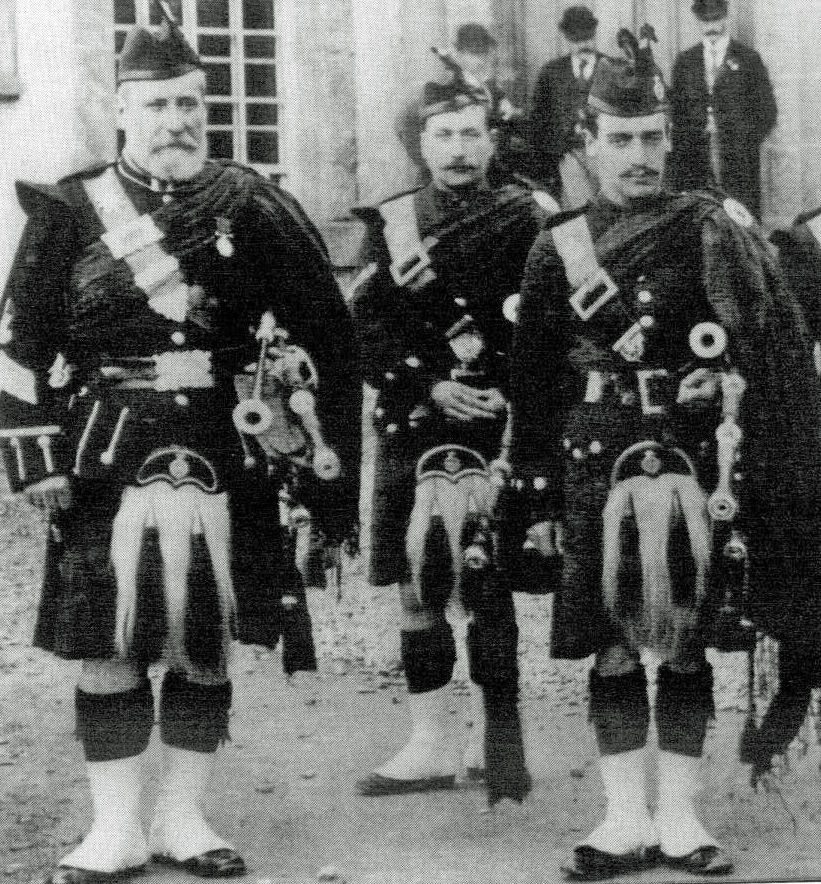
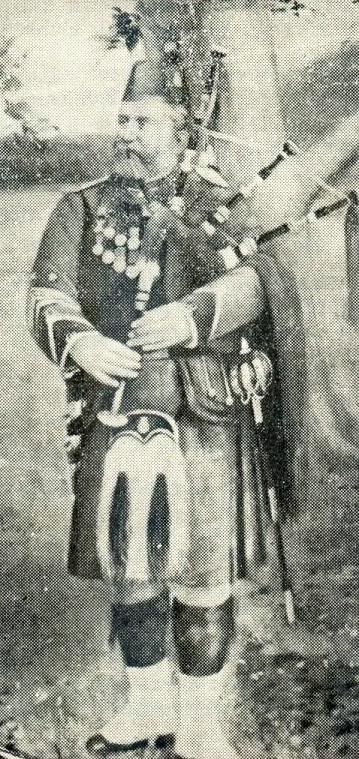
Pipe Major Duncan MacDougall (left), with sons John and Gavin (right) with the 2nd Perthshire Highland Rifle Volunteers in 1896.
[SIZE="2"][FONT="Georgia"][COLOR="DarkGreen"][B][I]T. E. ("TERRY") HOLMES[/I][/B][/COLOR][/FONT][/SIZE]
[SIZE="1"][FONT="Georgia"][COLOR="DarkGreen"][B][I]proud descendant of the McReynolds/MacRanalds of Ulster & Keppoch, Somerled & Robert the Bruce.[/SIZE]
[SIZE="1"]"Ah, here comes the Bold Highlander. No @rse in his breeks but too proud to tug his forelock..." Rob Roy (1995)[/I][/B][/COLOR][/FONT][/SIZE]
-
Similar Threads
-
By Big Paul in forum How to Accessorize your Kilt
Replies: 11
Last Post: 3rd October 07, 06:21 PM
-
By angerli in forum General Kilt Talk
Replies: 17
Last Post: 1st February 07, 02:13 PM
-
By cessna152towser in forum Show us your pics
Replies: 3
Last Post: 22nd May 06, 05:25 PM
Tags for this Thread
 Posting Permissions
- You may not post new threads
- You may not post replies
- You may not post attachments
- You may not edit your posts
-
Forum Rules
|
|










Bookmarks